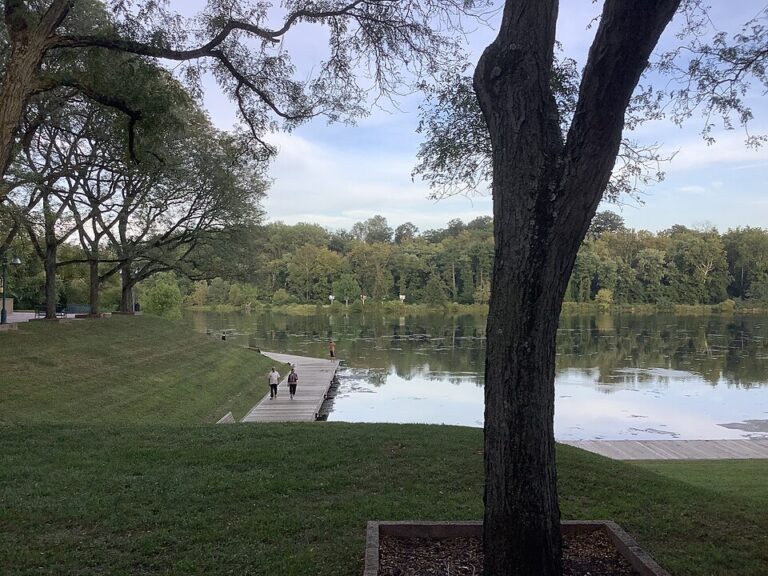
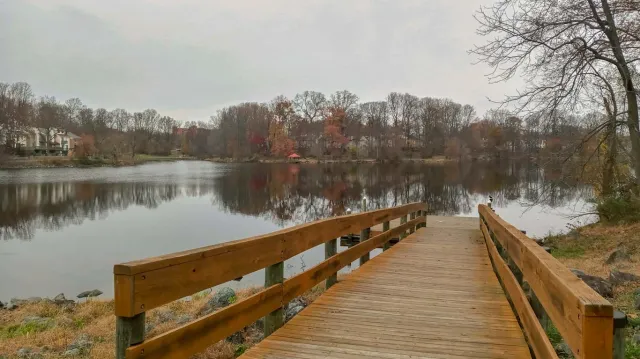
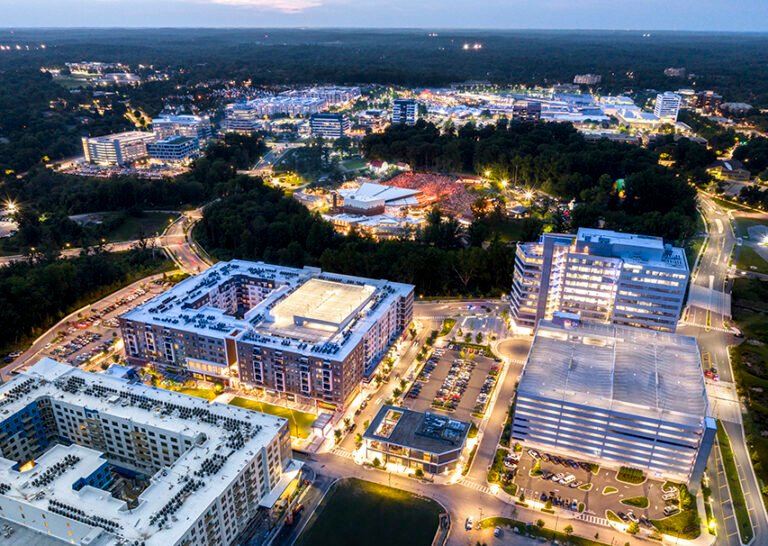
Oakland Mills stands as one of the ten villages that make up Columbia, Maryland, and it remains among the oldest. Residents here live inside a deliberate experiment in community design, one that shaped where neighbors meet, where children attend school, and how families reach support services. Understanding that structure helps anyone living in eastern Columbia navigate daily life more easily. This article explains the village’s origins, its schools, and the public resources available within its boundaries.
How Oakland Mills Became One of Columbia’s Founding Villages
Developer James Rouse launched Columbia in 1967 on Howard County farmland, organizing the new city into self-contained villages rather than conventional subdivisions. Each village received its own center, schools, pools, and meeting space so that residents could handle most of daily life close to home. Rouse stated openly that he wanted the plan to eliminate racial, religious, and class segregation. Oakland Mills opened its village center on November 11, 1969, making it part of the earliest wave of that vision.
The village name reaches much further back than the 1960s. A grist mill, a water-powered facility that ground grain into flour, operated on the site beginning in 1796, and a postal station carried the Oakland Mills name from 1821 until 1909. The land formed part of a 2,300-acre holding that included the Oakland Manor plantation, where enslaved people were forced to work. That history sits alongside the village’s stated founding ideals rather than apart from them.
Physical traces of the older landscape survive throughout the village. The Oakland Mills Blacksmith House joined the National Register of Historic Places in 2011, and The Other Barn, a 1947 agricultural building, became a community center when the village opened. A renovated pedestrian bridge over Route 29, completed in 2018, connects Oakland Mills to Town Center with a spiraling geometric span. These landmarks give a young planned city an unusually long memory.
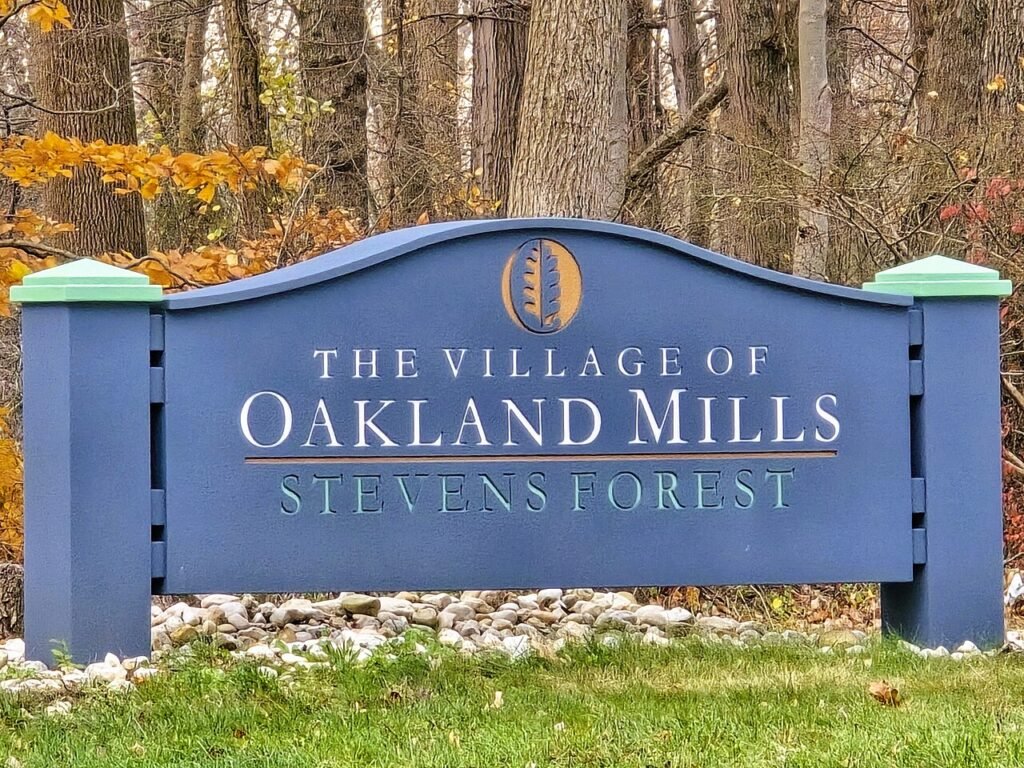
Image credit: Pemilligan, CC0, via Wikimedia Commons
The Three Neighborhoods and the Local Landscape
Oakland Mills divides into three neighborhoods: Stevens Forest, Talbott Springs, and Thunder Hill. Street names across the village borrow from American writers and artists, including Ernest Hemingway, F. Scott Fitzgerald, Carl Sandburg, Ralph Waldo Emerson, John Dos Passos, and Andrew Wyeth. Each neighborhood contains its own outdoor pool and its own elementary school. That arrangement keeps most errands and school runs within walking or short driving distance.
Central Maryland’s climate shapes how residents actually use those spaces. Columbia sits in the Piedmont between Baltimore and Washington, D.C., where summers turn hot and humid and winters run cool to cold and wet, with occasional heavy snowfall. Outdoor pools and the village pathway network carry community life from late spring through early fall. When weather closes those options, indoor gathering places such as The Other Barn, the Columbia Ice Rink, and the village youth and teen center absorb the demand.
Schools Serving Oakland Mills Families
The Howard County Public School System operates every public school in the village. Families in Oakland Mills feed into a compact, largely self-contained cluster:
- Stevens Forest Elementary School — serves the Stevens Forest neighborhood
- Talbott Springs Elementary School — serves the Talbott Springs neighborhood
- Thunder Hill Elementary School — serves the Thunder Hill neighborhood
- Oakland Mills Middle School — the single middle school for the village
- Oakland Mills High School — the village high school, adjacent to the middle school
The county runs a feeder system, so most students move through the same set of schools from kindergarten through twelfth grade. That design carries practical weight for households with more than one child. Siblings often stay within the same short radius through graduation.
School capacity and renovation remain active local issues. The Oakland Mills High School renovation has occupied the village board’s agenda alongside broader county planning questions.
Image credit: Pemilligan, CC0, via Wikimedia Commons
Community Resources Within Reach
Oakland Mills residents draw on a mix of village-level, county, and nonprofit resources. The village center houses The Meeting House, an interfaith center jointly owned and operated by multiple congregations, a model Columbia adopted in several villages. Nearby, the East Columbia branch of the Howard County Library System provides public computers, meeting rooms, passport services, early learning programs, and a dedicated teen space.
Behavioral health and family support services also operate close by. Grassroots Crisis Intervention Center runs free 24-hour crisis services from Old Annapolis Road in Columbia, including a crisis line, mobile crisis response, walk-in support, emergency shelter, and an outpatient mental health clinic. The center answers calls at 410-531-6677 and participates in the national 988 Suicide and Crisis Lifeline. Households facing acute stress, housing instability, or substance use concerns can reach these services without leaving the county.
Recreation and civic life round out the picture. The Columbia Association maintains the pathways, open space, and shared facilities that link Oakland Mills to the rest of the city. The village association programs its own calendar from The Other Barn, including summer concerts and a fall festival that draw residents from all three neighborhoods.
Governance, Covenants, and New Town Zoning
Howard County created a New Town zoning district specifically to permit Rouse’s plan, and that designation still governs how Columbia develops. The framework allows the mixed densities, shared open space, and village centers that conventional zoning would have blocked. Current county work on New Town zoning continues to draw attention from village boards, including Oakland Mills.
At the village level, the Oakland Mills Community Association administers restrictive covenants, which are recorded rules governing exterior changes to homes and properties. A volunteer board of up to seven members meets regularly and reviews issues ranging from facility upgrades to pool and splashpad proposals. Homeowners generally consult these covenants before adding a fence, deck, or shed. Knowing which body handles which decision saves residents considerable time.

Written by Ray Rivers, LCPC
Licensed psychotherapist, Sufi master teacher and founder of Relationship Remedy™. Every piece of content was written by Ray without assistance from Artificial Intelligence or another organization.